
new Gear shaping process automation
The gear shaping process automation is a modern manufacturing solution designed to enhance the precision, speed, and efficiency of gear production. By integrating advanced control systems and robotics, the gear shaping process automation ensures consistent accuracy in creating high-quality gear teeth profiles for automotive
1. The machine tool has four axes and three linkages, in which the tool transfer axis and the workpiece transfer axis are driven by a variable lead precision worm gear pair, and the processing efficiency is High, high precision and stability, mainly used in gearbox, automobile and tool industries.
2. The tool post adopts hydrostatic guide rail and hydrostatic bearing structure, which is suitable for high-efficiency machining of machine tools.
3. According to the user configuration machine tool loading and unloading, tooling fixtures, deburring mechanism and other accessories, suitable for mass production of parts.
4. Configure special spiral guide rail to process helical gear parts.
5.The gear shaper machine is equipped with a turning table with a turning angle of ±140.
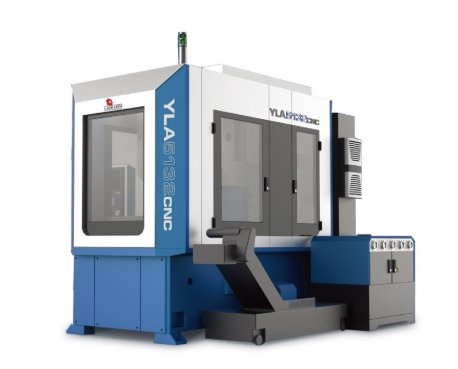
The gear shaping process automation is a modern manufacturing solution designed to enhance the precision, speed, and efficiency of gear production. By integrating advanced control systems and robotics, the gear shaping process automation ensures consistent accuracy in creating high-quality gear teeth profiles for automotive, aerospace, and industrial applications. This technology significantly reduces manual intervention, improving overall productivity and reliability.
Through intelligent programming and CNC integration, the gear shaping process automation allows seamless adjustments for different gear sizes, modules, and specifications. Automated monitoring systems track tool wear and machining conditions in real time, ensuring consistent results while extending the service life of cutting tools. This makes the process highly adaptable to both mass production and customized gear manufacturing.
One of the key advantages of the gear shaping process automation is the optimization of production cycles. Automated loading and unloading systems, combined with efficient synchronization of shaping operations, reduce downtime and minimize human error. As a result, manufacturers achieve faster turnaround times, higher output, and improved cost-effectiveness.
By adopting gear shaping process automation, industries benefit from streamlined workflows, superior gear quality, and long-term operational savings. This solution represents a step forward in modern gear manufacturing, ensuring that companies remain competitive in demanding global markets.
Recommended Blogs

Emerging Technologies in External Gear Cutting Machines: Revolutionizing Precision Engineering
Emerging Technologies in External Gear Cutting Machines: Revolutionizing Precision Engineering Table of Contents Introduction to External Gear Cutting Machines Importance of Gear Manufacturing in Modern Industries Technological Advancements in Gear Cutting Machines Automation and CNC Technology Digitalization and Smart Manufacturing Innovations in Mate
Exploring Internal Gear Cutting Machines: A Comprehensive Guide for Manufacturing Professionals
Internal gear cutting machines play a crucial role in the manufacturing sector, particularly in the production of gears that require high precision and reliability. These specialized machines are designed specifically for cutting the internal profiles of gears, enabling the creation of complex gear shapes and ensuring optimal performance in various applications. Understanding the operational mecha
From Design to Production: The Essential Role of Spur Gear Cutting Machines in Manufacturing
From Design to Production: The Essential Role of Spur Gear Cutting Machines in Manufacturing Table of Contents 1. Introduction to Spur Gear Cutting Machines 2. Importance of Spur Gears in Various Industries 3. The Design Process of Spur Gears 4. Cutting Technologies Used in Spur Gear Production 5. The Role of Automation in Gear Manufacturing 6. Quality Control in Spur Gear

Tel/Wechat/WhatsApp: +86 13968661799
E-mail:sales@chinaysl.net
Address: Xialiang Industrial Zone, Jinqing Town, Luqiao District, Taizhou City, Zhejiang Province


online message